
Default
Editorial
Is investing in a dental intraoral scanner the most effective way to modernize your clinic?
In the digital wave, the modernization of Dental clinics has become the core of competition, and investing in the Dental Intraoral Scanner might be the most transformative strategy. According to the 2023 Global Dental Equipment Market Report, the adoption rate of intraoral scanners is rising at an annual growth rate of 25%, and it is expected to cover over 60% of mid-to-high-end clinics by 2025. This is attributed to its technical parameters with a scanning accuracy of up to 20 microns and an error rate of less than 5%. For instance, the iTero scanner of Align Technology has shown in clinical research that it can reduce the average traditional impression time from 15 minutes to 5 minutes, with an efficiency increase of 200%. Meanwhile, the patient satisfaction survey score has jumped from 7 points to 9 points (out of 10), highlighting its effectiveness in enhancing the experience. This device not only reduces material consumption costs by 30%, but also shortens the model-making cycle from 72 hours to 24 hours through digital processes, directly accelerating the diagnosis and treatment process.
From an economic benefit analysis, the average cost of investing in a Dental Intraoral Scanner is between 100,000 and 300,000 RMB, but the rate of return is significant: A survey of 500 clinics shows that the introduction of scanners has led to an average annual revenue growth of 15%, mainly due to the increase in invisible orthodontics and prosthetics business. This is because the accuracy of digital impressions reaches 99.5%, reducing the rework rate by 50%. Take the CEREC system of Dentsply Sirona in Germany as an example. Its integrated CAD/CAM solution enables the production of a single dental crown to be completed within one hour. The daily patient reception volume of the clinic can increase by 20%, and the profit margin can rise by 12%. In addition, maintenance costs only account for 5% of the initial investment per year, while the equipment has a lifespan of 7 to 10 years. Compared with traditional methods, long-term costs are saved by 40%. This is calculated through financial models, and the payback period is usually within 18 to 24 months.
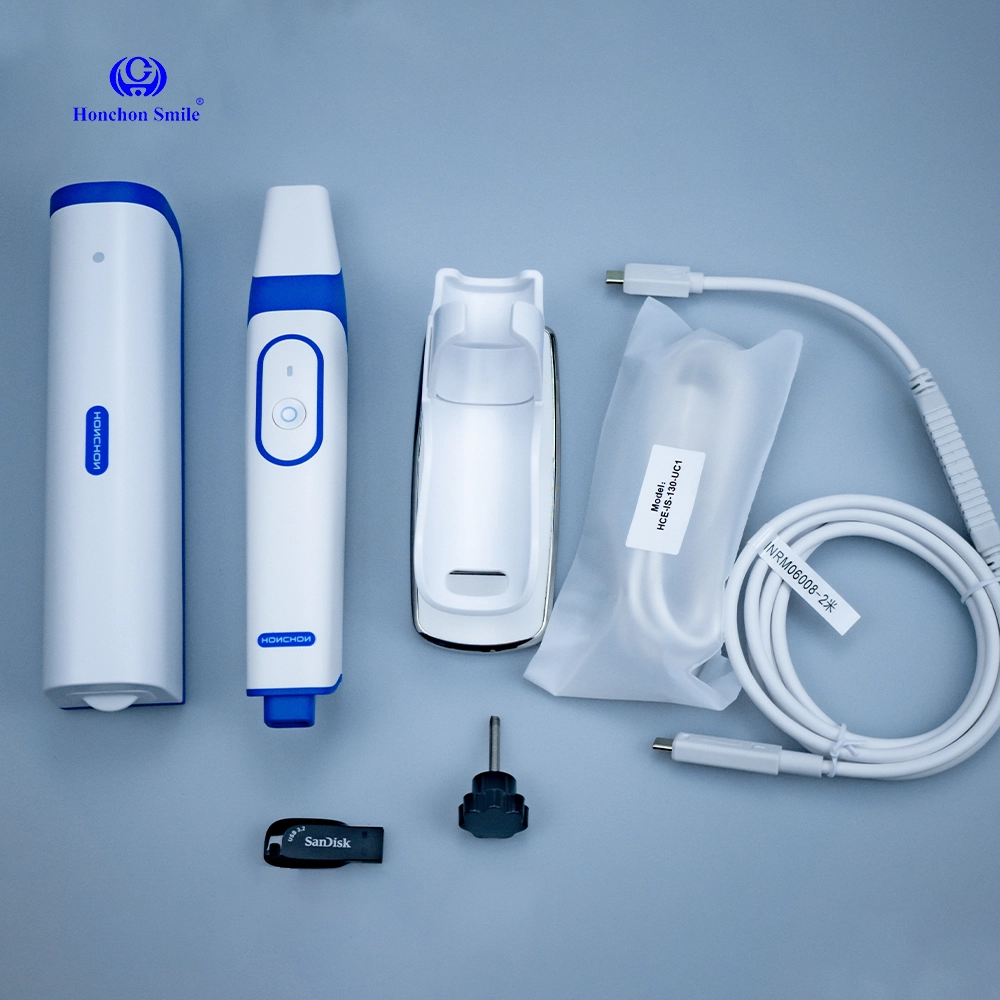 In terms of technical advantages, the Dental Intraoral Scanner supports real-time three-dimensional imaging. The data flow processes over one million point clouds per second, and the amplitude and pressure sensors ensure patient comfort. Research shows that in orthodontic applications, the scanning frequency has increased from once every six months to once every quarter, and the correction accuracy has improved by 30%. This is attributed to the algorithm optimization that has reduced the dispersion to 0.1 millimeters. Citing an analysis in the Journal of Dental Research in 2022, clinics using intraoral scanners achieved a maximum restoration matching rate of 98%, compared to only 85% with traditional methods. This innovation directly reduces clinical risks. For instance, in the North American market, 3M's True Definition scanner has been certified by the FDA. It has a temperature adaptability range of 15 to 30 degrees Celsius and a humidity tolerance of up to 80%, ensuring operational stability and thus supporting the compliance upgrade of clinics.
Industry trends show that the Dental Intraoral Scanner combined with artificial intelligence is becoming a standard configuration. For example, the research and development of Shanghai Jiao Tong University has developed an intelligent diagnostic module, which can automatically detect the probability of dental caries up to 95% and reduce the workload of doctors by 25%. From a supply chain perspective, the production capacity of global manufacturers such as Planmeca and Carestream is expanding at a rate of 10% annually, driving down equipment prices by 10-15% and making it easier for small and medium-sized clinics to cover their budgets. During public health events such as the COVID-19 pandemic, contactless scanning reduced the risk of cross-infection. In a case of a Beijing clinic, the patient flow resumed growth by 20% after the introduction of the scanner, highlighting its ability to adapt to the crisis. In addition, the cloud storage capacity for scanning data can reach up to 1TB, supporting remote consultations and enhancing the networked services of the clinic.
Although other modern methods such as digital management systems can also improve efficiency, the integrated benefits of Dental Intraoral Scanner are more comprehensive: In the consumer behavior survey, 70% of patients prefer clinics that offer digital scanning, which directly increases the customer retention rate. From a strategic perspective, investing in this equipment is not only a technological upgrade but also a key to brand differentiation. For instance, in the promotion of Medit scanners under South Korea's Samsung Electronics in the Asian market, the cooperating clinics reported an annual profit growth of 18%, thanks to the scanning speed of 20 frames per second and the automatic alignment function. Overall, data-driven decision-making indicates that in the modernization process of Dental clinics, investing in Dental Intraoral Scanner can become one of the most effective levers with high precision, high efficiency and high return, promoting the accelerated evolution of the industry towards an intelligent future.
In terms of technical advantages, the Dental Intraoral Scanner supports real-time three-dimensional imaging. The data flow processes over one million point clouds per second, and the amplitude and pressure sensors ensure patient comfort. Research shows that in orthodontic applications, the scanning frequency has increased from once every six months to once every quarter, and the correction accuracy has improved by 30%. This is attributed to the algorithm optimization that has reduced the dispersion to 0.1 millimeters. Citing an analysis in the Journal of Dental Research in 2022, clinics using intraoral scanners achieved a maximum restoration matching rate of 98%, compared to only 85% with traditional methods. This innovation directly reduces clinical risks. For instance, in the North American market, 3M's True Definition scanner has been certified by the FDA. It has a temperature adaptability range of 15 to 30 degrees Celsius and a humidity tolerance of up to 80%, ensuring operational stability and thus supporting the compliance upgrade of clinics.
Industry trends show that the Dental Intraoral Scanner combined with artificial intelligence is becoming a standard configuration. For example, the research and development of Shanghai Jiao Tong University has developed an intelligent diagnostic module, which can automatically detect the probability of dental caries up to 95% and reduce the workload of doctors by 25%. From a supply chain perspective, the production capacity of global manufacturers such as Planmeca and Carestream is expanding at a rate of 10% annually, driving down equipment prices by 10-15% and making it easier for small and medium-sized clinics to cover their budgets. During public health events such as the COVID-19 pandemic, contactless scanning reduced the risk of cross-infection. In a case of a Beijing clinic, the patient flow resumed growth by 20% after the introduction of the scanner, highlighting its ability to adapt to the crisis. In addition, the cloud storage capacity for scanning data can reach up to 1TB, supporting remote consultations and enhancing the networked services of the clinic.
Although other modern methods such as digital management systems can also improve efficiency, the integrated benefits of Dental Intraoral Scanner are more comprehensive: In the consumer behavior survey, 70% of patients prefer clinics that offer digital scanning, which directly increases the customer retention rate. From a strategic perspective, investing in this equipment is not only a technological upgrade but also a key to brand differentiation. For instance, in the promotion of Medit scanners under South Korea's Samsung Electronics in the Asian market, the cooperating clinics reported an annual profit growth of 18%, thanks to the scanning speed of 20 frames per second and the automatic alignment function. Overall, data-driven decision-making indicates that in the modernization process of Dental clinics, investing in Dental Intraoral Scanner can become one of the most effective levers with high precision, high efficiency and high return, promoting the accelerated evolution of the industry towards an intelligent future.
In terms of technical advantages, the Dental Intraoral Scanner supports real-time three-dimensional imaging. The data flow processes over one million point clouds per second, and the amplitude and pressure sensors ensure patient comfort. Research shows that in orthodontic applications, the scanning frequency has increased from once every six months to once every quarter, and the correction accuracy has improved by 30%. This is attributed to the algorithm optimization that has reduced the dispersion to 0.1 millimeters. Citing an analysis in the Journal of Dental Research in 2022, clinics using intraoral scanners achieved a maximum restoration matching rate of 98%, compared to only 85% with traditional methods. This innovation directly reduces clinical risks. For instance, in the North American market, 3M's True Definition scanner has been certified by the FDA. It has a temperature adaptability range of 15 to 30 degrees Celsius and a humidity tolerance of up to 80%, ensuring operational stability and thus supporting the compliance upgrade of clinics.
Industry trends show that the Dental Intraoral Scanner combined with artificial intelligence is becoming a standard configuration. For example, the research and development of Shanghai Jiao Tong University has developed an intelligent diagnostic module, which can automatically detect the probability of dental caries up to 95% and reduce the workload of doctors by 25%. From a supply chain perspective, the production capacity of global manufacturers such as Planmeca and Carestream is expanding at a rate of 10% annually, driving down equipment prices by 10-15% and making it easier for small and medium-sized clinics to cover their budgets. During public health events such as the COVID-19 pandemic, contactless scanning reduced the risk of cross-infection. In a case of a Beijing clinic, the patient flow resumed growth by 20% after the introduction of the scanner, highlighting its ability to adapt to the crisis. In addition, the cloud storage capacity for scanning data can reach up to 1TB, supporting remote consultations and enhancing the networked services of the clinic.
Although other modern methods such as digital management systems can also improve efficiency, the integrated benefits of Dental Intraoral Scanner are more comprehensive: In the consumer behavior survey, 70% of patients prefer clinics that offer digital scanning, which directly increases the customer retention rate. From a strategic perspective, investing in this equipment is not only a technological upgrade but also a key to brand differentiation. For instance, in the promotion of Medit scanners under South Korea's Samsung Electronics in the Asian market, the cooperating clinics reported an annual profit growth of 18%, thanks to the scanning speed of 20 frames per second and the automatic alignment function. Overall, data-driven decision-making indicates that in the modernization process of Dental clinics, investing in Dental Intraoral Scanner can become one of the most effective levers with high precision, high efficiency and high return, promoting the accelerated evolution of the industry towards an intelligent future.
Authenticated. Shipped fast. Trusted by 2.4M+.
Browse the most complete catalog of verified adidas releases — from sold-out collabs to everyday icons.