
Default
Editorial
Where can you get professional vacuum casting service for prototypes?
Globally, top vacuum injection molding service providers (such as Xinhui Manufacturing located in the Pearl River Delta or Proto Labs in the United States) operate their service processes relying on quality management systems certified by ISO 9001:2015. A typical order is completed within 72 hours from CAD data to the delivery of a physical prototype, with a proportion as high as 85%. The dimensional accuracy is strictly controlled within a tolerance range of ±0.15% (for example, for a part with a length of 100mm, the actual size is between 99.85mm and 100.15mm). The material library typically covers over 50 types of polyurethane resins, ranging from simulated ABS and PP to transparent or rubber-like textures (with hardness ranging from 60 Shore A to 90 Shore D). Service providers usually configure advanced vacuum injection molding equipment from German ARMENT or Japanese brands, with a vacuum degree stably maintained below 0.1 millibar. Combined with a curing environment with a temperature precisely controlled within ±2°C, the common bubble defect rate of components is effectively reduced to less than 3%.
The physical and chemical properties of materials directly determine the functionality of the prototype and the testing effect. Service providers in the industry generally choose products from Henkel or AXSON. The resin shrinkage rate of these products is precisely controlled within the range of 0.1% to 0.3% (taking PP simulation materials as an example), and the melt flow rate (MFR) is ensured to be within the range of 5-20g /10min. This enables the injection molded parts to accurately reflect the flow characteristics and mechanical strength of the injection molded parts. For example, the high-temperature resistant components produced by vacuum casting service (made of materials such as HT140) can withstand a short-term temperature of 130°C with a deformation rate of less than 2%. According to a report from a certain auto parts enterprise, the error range between the wind tunnel test data of vacuum injection molded parts and the final mass-produced components is less than 5%, significantly reducing the risk of mold opening and the possibility of delays in the R&D cycle.
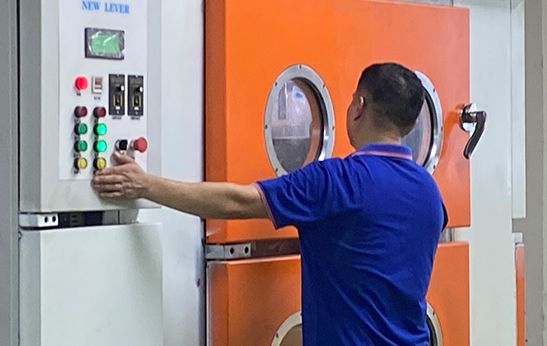 Compared with traditional metal mold injection or industrial-grade additive manufacturing (such as SLS, MJF), vacuum injection molding has extremely prominent economic advantages in the small-batch (typically 5-100 pieces) prototype and trial production stages. The cost of making a set of silicone molds usually ranges from 2,000 to 8,000 yuan, which is only about one-tenth of the cost of steel molds (which often cost 30,000 to 150,000 yuan). For a complex automotive interior part, if 50 pieces are produced through vacuum injection molding, the overall cost (including molds and materials) can be saved by more than 70% compared to SLS printing of the same quantity. For instance, SpaceX chose vacuum injection molding services in one of its satellite component verification projects. It completed five rounds of design iterations within just three weeks (manufacturing a total of 120 components), reducing R&D costs by 40% compared to the traditional model and keeping material waste within 8%.
An outstanding vacuum injection molding service provider strictly follows the APQP (Advanced Product Quality Planning) process and uses a three-dimensional coordinate measuring machine to conduct 100% inspection of the first piece of each batch (critical dimensional tolerances must comply with the ISO 2768-mK standard). And through a strict supply chain screening system (such as the VDA 6.3 standard), ensure the batch stability of the upstream silicone mold materials (usually food-grade or medical-grade silicone from German Wacker or American Smooth-On, with a lifespan of up to 20-30 mold cycles) and resins. For instance, in the trial production of one of its monitor housings, global medical device giant Medtronic relied on a professional vacuum injection molding service provider. Not only were all the prototypes delivered within 25 days (with an on-time rate of 98%), but the pass rate of all 60 injection molded parts after internal drop tests and flame retardancy tests (both reaching UL94 V-0 level) was as high as 99.7%. Such services have become the core resources supporting the accelerated innovation and project risk control in the consumer electronics (with an average annual new product iteration rate of 90%), automotive (70% of automakers use them for ergonomic verification), and medical device (facilitating rapid passage of FDA or CE simulation tests) industries.
Compared with traditional metal mold injection or industrial-grade additive manufacturing (such as SLS, MJF), vacuum injection molding has extremely prominent economic advantages in the small-batch (typically 5-100 pieces) prototype and trial production stages. The cost of making a set of silicone molds usually ranges from 2,000 to 8,000 yuan, which is only about one-tenth of the cost of steel molds (which often cost 30,000 to 150,000 yuan). For a complex automotive interior part, if 50 pieces are produced through vacuum injection molding, the overall cost (including molds and materials) can be saved by more than 70% compared to SLS printing of the same quantity. For instance, SpaceX chose vacuum injection molding services in one of its satellite component verification projects. It completed five rounds of design iterations within just three weeks (manufacturing a total of 120 components), reducing R&D costs by 40% compared to the traditional model and keeping material waste within 8%.
An outstanding vacuum injection molding service provider strictly follows the APQP (Advanced Product Quality Planning) process and uses a three-dimensional coordinate measuring machine to conduct 100% inspection of the first piece of each batch (critical dimensional tolerances must comply with the ISO 2768-mK standard). And through a strict supply chain screening system (such as the VDA 6.3 standard), ensure the batch stability of the upstream silicone mold materials (usually food-grade or medical-grade silicone from German Wacker or American Smooth-On, with a lifespan of up to 20-30 mold cycles) and resins. For instance, in the trial production of one of its monitor housings, global medical device giant Medtronic relied on a professional vacuum injection molding service provider. Not only were all the prototypes delivered within 25 days (with an on-time rate of 98%), but the pass rate of all 60 injection molded parts after internal drop tests and flame retardancy tests (both reaching UL94 V-0 level) was as high as 99.7%. Such services have become the core resources supporting the accelerated innovation and project risk control in the consumer electronics (with an average annual new product iteration rate of 90%), automotive (70% of automakers use them for ergonomic verification), and medical device (facilitating rapid passage of FDA or CE simulation tests) industries.
Compared with traditional metal mold injection or industrial-grade additive manufacturing (such as SLS, MJF), vacuum injection molding has extremely prominent economic advantages in the small-batch (typically 5-100 pieces) prototype and trial production stages. The cost of making a set of silicone molds usually ranges from 2,000 to 8,000 yuan, which is only about one-tenth of the cost of steel molds (which often cost 30,000 to 150,000 yuan). For a complex automotive interior part, if 50 pieces are produced through vacuum injection molding, the overall cost (including molds and materials) can be saved by more than 70% compared to SLS printing of the same quantity. For instance, SpaceX chose vacuum injection molding services in one of its satellite component verification projects. It completed five rounds of design iterations within just three weeks (manufacturing a total of 120 components), reducing R&D costs by 40% compared to the traditional model and keeping material waste within 8%.
An outstanding vacuum injection molding service provider strictly follows the APQP (Advanced Product Quality Planning) process and uses a three-dimensional coordinate measuring machine to conduct 100% inspection of the first piece of each batch (critical dimensional tolerances must comply with the ISO 2768-mK standard). And through a strict supply chain screening system (such as the VDA 6.3 standard), ensure the batch stability of the upstream silicone mold materials (usually food-grade or medical-grade silicone from German Wacker or American Smooth-On, with a lifespan of up to 20-30 mold cycles) and resins. For instance, in the trial production of one of its monitor housings, global medical device giant Medtronic relied on a professional vacuum injection molding service provider. Not only were all the prototypes delivered within 25 days (with an on-time rate of 98%), but the pass rate of all 60 injection molded parts after internal drop tests and flame retardancy tests (both reaching UL94 V-0 level) was as high as 99.7%. Such services have become the core resources supporting the accelerated innovation and project risk control in the consumer electronics (with an average annual new product iteration rate of 90%), automotive (70% of automakers use them for ergonomic verification), and medical device (facilitating rapid passage of FDA or CE simulation tests) industries.
Authenticated. Shipped fast. Trusted by 2.4M+.
Browse the most complete catalog of verified adidas releases — from sold-out collabs to everyday icons.