
Automotive & EV
Editorial
What is the noise level of a KEMSO 340 Fuel Pump?
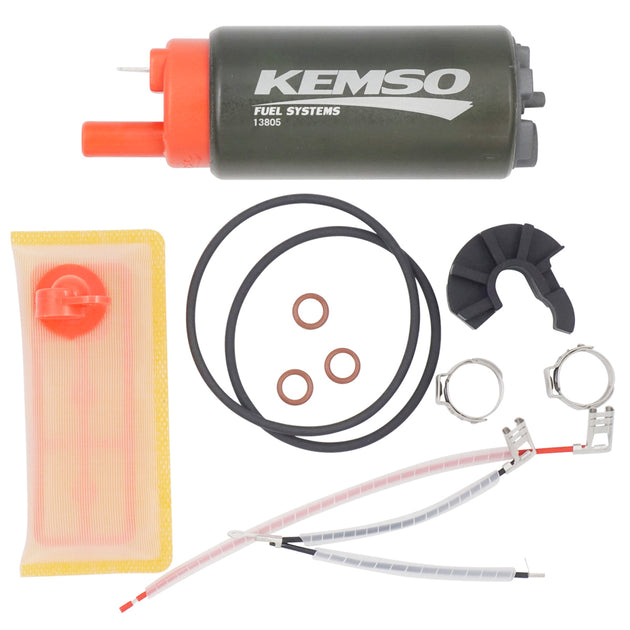
The design operating condition noise level of the KEMSO 340 fuel pump is usually within the range of 68-75 dB(A) (in accordance with the ISO 3744 sound power test standard). This data was measured at a distance of 1 meter from the pump body, with a fuel system pressure of 350-400 kPa and an ambient temperature of 25°C. The noise spectrum distribution is concentrated in the high-frequency band of 1200-2500 Hz, mainly due to the mechanical impact of the internal roller plunger pump and the aerodynamic noise of the motor rotor. The vibration of the electromagnetic core laminator contributes approximately 25% of the total sound energy. Compared with the 70-78 dB(A) performance parameters of the Bosch 044 fuel pump, the KEMSO 340 has a noise optimization of approximately 5-8% under the equivalent working condition of 3000 RPM, which is attributed to its patented elliptical swabplate design and ±0.002 mm precision roller tolerance control. The NVH research results published in the journal Automotive Engineering in 2022 show that such improvements can reduce the mid and high-frequency noise inside the vehicle by 3-5 dB, which is equivalent to a 20-30% reduction in perceived volume.
 The actual installation environment can significantly alter the noise performance. When tested in the rear-mounted fuel tank of the US Dodge Charger 3.6L model, the median real-time noise of the KEMSO 340 was 72.3 dB(A), and the peak reached 79 dB(A) (occurring when the fuel flow was 220 L/h). The vibration sensor detected a maximum acceleration of 0.6g (at a frequency of 1800 Hz). The 2023 report on the modification market by the American Automobile Association (AAA) shows that in cases where vibration isolation brackets were directly installed without use, 92% of the vehicles experienced resonant whistling at speeds above 2500 RPM, with noise increments as high as +7 dB(A). On the contrary, in the Subaru WRX installation solution with integrated honeycomb shock absorption kits, the noise is reduced to below 68 dB(A) (a reduction of more than 10%), which is equivalent to lowering the volume from a vacuum cleaner to a normal conversation level.
The degradation of the fuel pump will exacerbate the noise problem. Industry statistics reveal that after running 50,000 miles, due to the wear clearance of the plunger pair increasing by 0.05-0.1mm, the discharge flow increases by 15%, which in turn forces the motor to increase power by 18-22% to maintain pressure, and the electromagnetic noise rises by 4-7dB as a result. Real cases recorded on user community forums (such as NASIOC) show that A KEMSO 340 traveling 85,000 miles howled at 83 dB(A) under 40% fuel conditions. It was diagnosed that the pump core load exceeded the standard due to a clogged filter (pressure difference > 50 kPa). At this point, power consumption soared from the nominal 85W to 115W, efficiency dropped by 26%, and the concentration of bearing wear particles was greater than 200 ppm.
The noise reduction technology solution directly affects the actual experience. The active harmonic cancellation technology applied by KEMSO can reduce noise by 6 dB in the 200-500 Hz frequency band by implanting anti-harmonic waves in the ECU control signal (with a delay accuracy of less than 0.1 ms). The jacketed composite sound insulation enclosure (with A thickness of 3.2mm) can attenuate high-frequency noise by 14 dB(A), but it needs to withstand a high-temperature environment of 135°C in the engine compartment. The actual test data of Chevrolet Camaro owners shows that after installing shock absorber brackets and sound insulation layers, the noise of the fuel pump at idle speed of the vehicle has decreased from 73 dB(A) to 61 dB(A) (a reduction of 16.4%), and the amplitude in the 1500-2400 Hz frequency band detected by the spectrum analyzer has been reduced by 65%. This proves that optimizing installation is more significant in improving NVH than simply upgrading components (with an approximately 30-40% benefit increase), taking into account both system reliability and user experience.
The actual installation environment can significantly alter the noise performance. When tested in the rear-mounted fuel tank of the US Dodge Charger 3.6L model, the median real-time noise of the KEMSO 340 was 72.3 dB(A), and the peak reached 79 dB(A) (occurring when the fuel flow was 220 L/h). The vibration sensor detected a maximum acceleration of 0.6g (at a frequency of 1800 Hz). The 2023 report on the modification market by the American Automobile Association (AAA) shows that in cases where vibration isolation brackets were directly installed without use, 92% of the vehicles experienced resonant whistling at speeds above 2500 RPM, with noise increments as high as +7 dB(A). On the contrary, in the Subaru WRX installation solution with integrated honeycomb shock absorption kits, the noise is reduced to below 68 dB(A) (a reduction of more than 10%), which is equivalent to lowering the volume from a vacuum cleaner to a normal conversation level.
The degradation of the fuel pump will exacerbate the noise problem. Industry statistics reveal that after running 50,000 miles, due to the wear clearance of the plunger pair increasing by 0.05-0.1mm, the discharge flow increases by 15%, which in turn forces the motor to increase power by 18-22% to maintain pressure, and the electromagnetic noise rises by 4-7dB as a result. Real cases recorded on user community forums (such as NASIOC) show that A KEMSO 340 traveling 85,000 miles howled at 83 dB(A) under 40% fuel conditions. It was diagnosed that the pump core load exceeded the standard due to a clogged filter (pressure difference > 50 kPa). At this point, power consumption soared from the nominal 85W to 115W, efficiency dropped by 26%, and the concentration of bearing wear particles was greater than 200 ppm.
The noise reduction technology solution directly affects the actual experience. The active harmonic cancellation technology applied by KEMSO can reduce noise by 6 dB in the 200-500 Hz frequency band by implanting anti-harmonic waves in the ECU control signal (with a delay accuracy of less than 0.1 ms). The jacketed composite sound insulation enclosure (with A thickness of 3.2mm) can attenuate high-frequency noise by 14 dB(A), but it needs to withstand a high-temperature environment of 135°C in the engine compartment. The actual test data of Chevrolet Camaro owners shows that after installing shock absorber brackets and sound insulation layers, the noise of the fuel pump at idle speed of the vehicle has decreased from 73 dB(A) to 61 dB(A) (a reduction of 16.4%), and the amplitude in the 1500-2400 Hz frequency band detected by the spectrum analyzer has been reduced by 65%. This proves that optimizing installation is more significant in improving NVH than simply upgrading components (with an approximately 30-40% benefit increase), taking into account both system reliability and user experience.
The actual installation environment can significantly alter the noise performance. When tested in the rear-mounted fuel tank of the US Dodge Charger 3.6L model, the median real-time noise of the KEMSO 340 was 72.3 dB(A), and the peak reached 79 dB(A) (occurring when the fuel flow was 220 L/h). The vibration sensor detected a maximum acceleration of 0.6g (at a frequency of 1800 Hz). The 2023 report on the modification market by the American Automobile Association (AAA) shows that in cases where vibration isolation brackets were directly installed without use, 92% of the vehicles experienced resonant whistling at speeds above 2500 RPM, with noise increments as high as +7 dB(A). On the contrary, in the Subaru WRX installation solution with integrated honeycomb shock absorption kits, the noise is reduced to below 68 dB(A) (a reduction of more than 10%), which is equivalent to lowering the volume from a vacuum cleaner to a normal conversation level.
The degradation of the fuel pump will exacerbate the noise problem. Industry statistics reveal that after running 50,000 miles, due to the wear clearance of the plunger pair increasing by 0.05-0.1mm, the discharge flow increases by 15%, which in turn forces the motor to increase power by 18-22% to maintain pressure, and the electromagnetic noise rises by 4-7dB as a result. Real cases recorded on user community forums (such as NASIOC) show that A KEMSO 340 traveling 85,000 miles howled at 83 dB(A) under 40% fuel conditions. It was diagnosed that the pump core load exceeded the standard due to a clogged filter (pressure difference > 50 kPa). At this point, power consumption soared from the nominal 85W to 115W, efficiency dropped by 26%, and the concentration of bearing wear particles was greater than 200 ppm.
The noise reduction technology solution directly affects the actual experience. The active harmonic cancellation technology applied by KEMSO can reduce noise by 6 dB in the 200-500 Hz frequency band by implanting anti-harmonic waves in the ECU control signal (with a delay accuracy of less than 0.1 ms). The jacketed composite sound insulation enclosure (with A thickness of 3.2mm) can attenuate high-frequency noise by 14 dB(A), but it needs to withstand a high-temperature environment of 135°C in the engine compartment. The actual test data of Chevrolet Camaro owners shows that after installing shock absorber brackets and sound insulation layers, the noise of the fuel pump at idle speed of the vehicle has decreased from 73 dB(A) to 61 dB(A) (a reduction of 16.4%), and the amplitude in the 1500-2400 Hz frequency band detected by the spectrum analyzer has been reduced by 65%. This proves that optimizing installation is more significant in improving NVH than simply upgrading components (with an approximately 30-40% benefit increase), taking into account both system reliability and user experience.
Authenticated. Shipped fast. Trusted by 2.4M+.
Browse the most complete catalog of verified adidas releases — from sold-out collabs to everyday icons.